
Trading has become one of the most popular ways to build wealth online. Whether you’re looking to create a side income, diversify your investments, or eventually trade full-time, learning how to start trading the right way can save you from costly mistakes and help you build a sustainable strategy. How to Start Trading in 2026: Complete Beginner’s Guide
After years of working in affiliate marketing and promoting financial products, I’ve seen thousands of aspiring traders enter the market. Most fail not because trading is impossible, but because they start without a clear plan. They watch a few videos, deposit money, place random trades, and then wonder why they lose.
The traders who succeed treat trading like a business—not a gamble.
In this guide, you’ll learn exactly how to start trading from scratch, choose the right market, manage risk, and build a strong foundation for long-term success.

What Is Trading?
Trading is the process of buying and selling financial assets to profit from price movements.
Unlike long-term investing, where investors hold assets for years, traders often buy and sell within days, hours, or even minutes.
Common assets that traders trade include:
- Stocks
- Forex (currencies)
- Cryptocurrencies
- Commodities
- Indices
- ETFs
The goal is simple: buy low and sell high, or sell high and buy back lower.
However, successful trading requires knowledge, discipline, and proper risk management.
Why More People Are Learning How to Start Trading
The rise of online brokerages and mobile trading apps has made trading more accessible than ever.
Some key benefits include:
Flexible Schedule
Many markets operate nearly 24 hours a day.
Low Startup Capital
Some brokers allow trading with as little as $50-$100.
Multiple Income Opportunities
Traders can profit in both rising and falling markets.
Global Market Access
You can trade assets from around the world from your laptop or smartphone.
That said, accessibility doesn’t mean easy profits. Trading requires skill development and continuous learning.
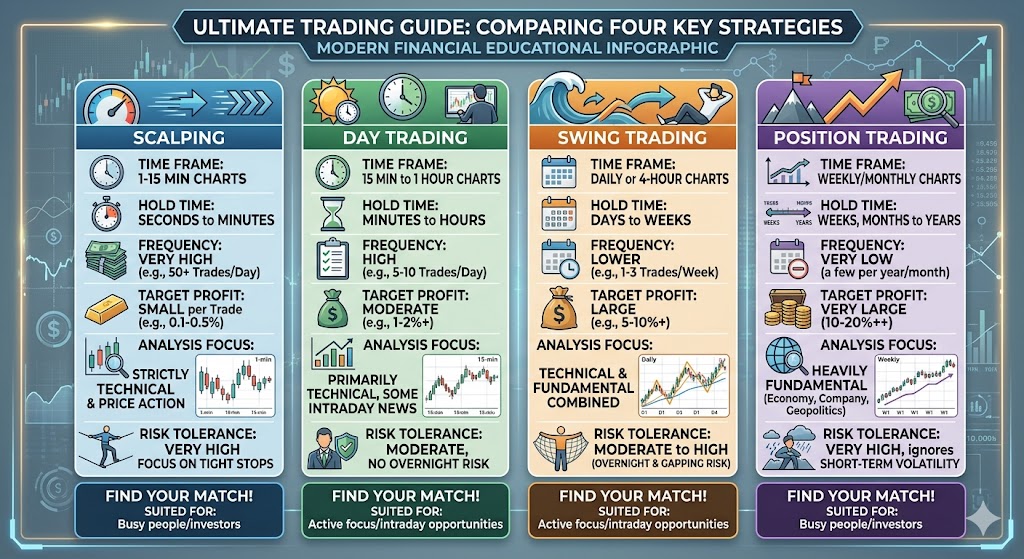
Step 1: Understand the Different Types of Trading
One of the biggest mistakes beginners make is jumping into trading without understanding the various styles.
Day Trading
Day traders open and close positions within the same day.
Pros:
- No overnight risk
- Frequent opportunities
Cons:
- Time intensive
- Emotionally demanding
Swing Trading
Swing traders hold positions for several days or weeks.
Pros:
- Less screen time
- Suitable for beginners
Cons:
- Overnight market risk
Position Trading
Position traders hold assets for months.
Pros:
- Less stress
- Lower trading frequency
Cons:
- Requires patience
Scalping
Scalpers make multiple quick trades throughout the day.
Pros:
- Many opportunities
Cons:
- High stress
- Advanced skill required
For most beginners learning how to start trading, swing trading offers the best balance between risk and time commitment.
Step 2: Choose a Market to Trade
You don’t need to trade everything.
In fact, experienced traders often specialize in one market.
Stock Trading
Best for:
- Beginners
- Long-term wealth building
- Swing traders
Popular stocks often have strong liquidity and predictable behavior.
Forex Trading
Forex involves trading currency pairs.
Examples:
- EUR/USD
- GBP/USD
- USD/JPY
Best for:
- Active traders
- Those interested in macroeconomics
Cryptocurrency TradingCrypto markets operate.
Popular cryptocurrencies include:
- Bitcoin
- Ethereum
- Solana
Best for:
- High-risk traders
- Volatility seekers
Commodity Trading
Examples include:
- Gold
- Silver
- Oil
Best for:
- Diversification
- Inflation hedging
Step 3: Learn Basic Trading Concepts
Before risking real money, understand these key concepts.
Market Trends
Markets generally move in three directions:
Uptrend
Higher highs and higher lows.
Downtrend
Lower highs and lower lows.
Sideways Market
Price moves within a range.
Understanding trends is one of the most important skills in trading.
Support and Resistance
Support
A price level where buyers often enter.
Resistance
A price level where sellers often enter.
These levels help traders identify entry and exit points.
Risk-Reward Ratio
Professional traders focus heavily on risk-reward ratios.
For example:
- Risk: $100
- Potential Profit: $300
This creates a 1:3 risk-reward ratio.
One lesson I’ve learned from years of promoting trading products and working with successful traders is this:
Profitable traders think about risk first and profit second.
Step 4: Open a Trading Account
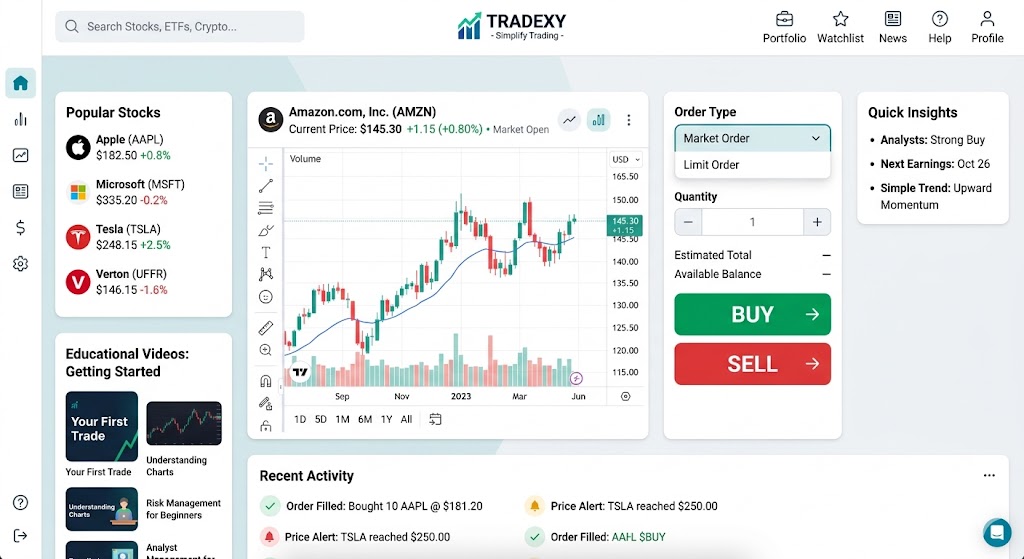
To start trading, you’ll need a brokerage account.
When evaluating brokers, consider:
Regulation
Choose regulated brokers only.
Trading Fees
Look at:
- Spreads
- Commissions
- Withdrawal fees
Available Markets
Ensure the broker supports your preferred assets.
Trading Platform
A user-friendly platform is crucial.
Educational Resources
Good brokers provide:
- Webinars
- Tutorials
- Market analysis
Step 5: Start with a Demo Account
This is the step most beginners skip.
A demo account allows you to trade with virtual money.
Benefits include:
- Learning platform functionality
- Testing strategies
- Building confidence
- Avoiding beginner mistakes
I often recommend spending at least 30 days in a demo environment before trading real funds.
Think of it as flight training before piloting a real airplane.
Step 6: Create a Trading Plan
A trading plan removes emotional decision-making.
Your plan should define:
Entry Rules
When will you enter a trade?
Example:
- Trend is bullish
- Price breaks resistance
- Trading volume increases
Exit Rules
When will you take profits?
Example:
- Target risk-reward ratio achieved
- Technical resistance reached
Stop Loss Rules
Determine your maximum loss before entering a trade.
Position Sizing
Never risk too much on one trade.
Many professional traders risk only:
1%-2% of their account per trade.
Step 7: Learn Technical Analysis
Technical analysis helps traders interpret price movements.
Important tools include:
Candlestick Patterns
Examples:
- Hammer
- Doji
- Engulfing Candle
Moving Averages
Used to identify trends.
Popular settings:
- 20 EMA
- 50 EMA
- 200 EMA
RSI (Relative Strength Index)
Helps identify:
- Overbought conditions
- Oversold conditions
MACD
Useful for trend confirmation.
The goal isn’t to use every indicator.
The best traders often use only a few tools and master them.
Step 8: Manage Risk Like a Professional
Risk management is what separates successful traders from gamblers.
Here are the rules I consistently hear from profitable traders:
Never Risk More Than You Can Afford to Lose
Trading capital should not be:
- Rent money
- Emergency savings
- Debt funds
Always Use Stop Losses
A stop loss automatically exits losing trades.
This protects your account from major drawdowns.
Avoid Overtrading
More trades do not equal more profits.
Many beginners lose money because they trade out of boredom.
Focus on Capital Preservation
Profits come later.
Common Mistakes Beginners Make
If you’re learning how to start trading, avoid these common errors.
Trading Without Education
Many traders enter the market after watching a few social media videos.
This usually ends badly.
Following Random Signals
Blindly copying signals rarely works long term.
Understand every trade you take.
Ignoring Risk Management
One bad trade can destroy months of progress.
Revenge Trading
Trying to recover losses emotionally often creates larger losses.
Using Too Much Leverage
Leverage magnifies both profits and losses.
Beginners should use leverage cautiously.
Best Tools for Beginner Traders
Here are some tools worth considering:
Charting Software
- TradingView
- MetaTrader
Economic Calendars
- Forex Factory
- Investing.com
Journaling Tools
- Edgewonk
- Tradervue
Keeping a trading journal can dramatically accelerate improvement.
How Much Money Do You Need to Start Trading?
This is one of the most common questions.
The answer depends on your market.
Stock Trading
Recommended: $500-$2,000+
Forex Trading
Recommended: $100-$500+
Crypto Trading
Recommended: $100-$1,000+
However, the amount matters less than your risk management.
A disciplined trader with $500 often performs better than an undisciplined trader with $50,000.
Can Trading Become a Full-Time Income?
Yes, but it usually takes years.
Most successful traders spend:
- Months learning
- Months practicing
- Years refining their strategy
Treat trading as a skill-building process rather than a get-rich-quick opportunity.
The traders who stay consistent and focus on continuous improvement tend to outperform those chasing fast profits.
Final Thoughts on How to Start Trading
Learning how to start trading is one of the most valuable financial skills you can develop.
The journey starts with education, continues through practice, and succeeds through discipline.
Remember these key principles:
- Start with a demo account
- Focus on one market
- Learn risk management
- Develop a trading plan
- Keep a trading journal
- Stay patient
The market will always provide opportunities. Your job is to be prepared when they arrive.
If you approach trading like a professional business rather than a shortcut to wealth, you’ll give yourself the best chance of long-term success.
Frequently Asked Questions (FAQs)
How do I start trading as a complete beginner?
Start by learning basic market concepts, opening a demo account, practicing risk management, and developing a simple trading strategy before using real money.
How much money do I need to start trading?
Many brokers allow trading with as little as $100, but beginners should ideally start with $500-$1,000 to properly manage risk.
Which market is best for beginners?
Stock trading and swing trading are generally considered the most beginner-friendly due to lower complexity and manageable risk.
Is trading better than investing?
Trading focuses on short-term opportunities, while investing focuses on long-term growth. Many successful individuals use both approaches.
Can I learn trading on my own?
Yes. With educational resources, demo accounts, trading journals, and consistent practice, many traders become profitable through self-study.
How long does it take to become profitable?
Most traders require several months to years of education, practice, and strategy refinement before achieving consistent profitability.
What is the biggest mistake new traders make?
Poor risk management is often the biggest reason traders lose money. Always use stop losses and manage position sizes carefully.
Is trading risky?
Yes. All forms of trading involve risk. Proper education, risk management, and discipline can significantly reduce potential losses.